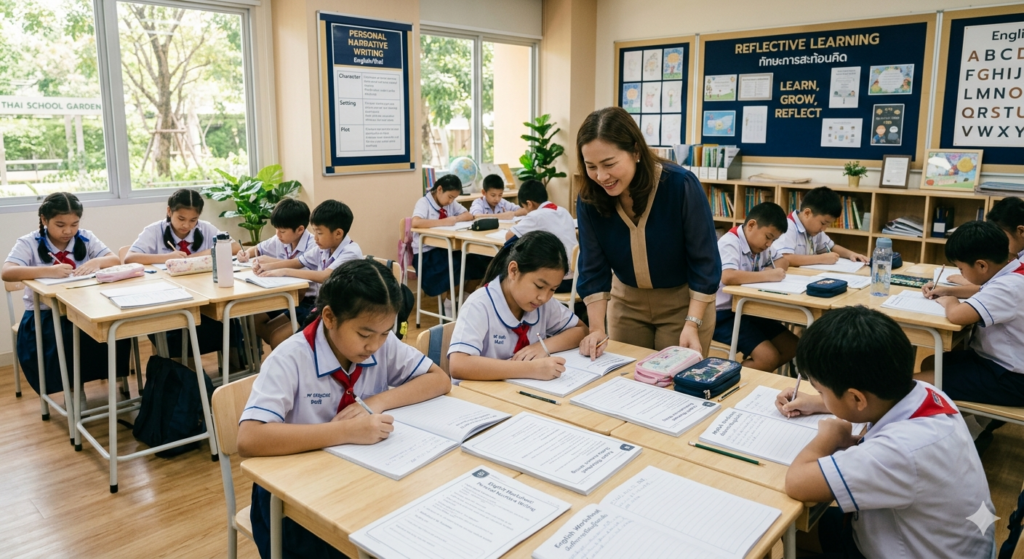
“การเขียนภาษาอังกฤษไม่ควรเป็นเพียงกิจกรรมที่ให้นักเรียนเขียนตามหัวข้อแล้วส่งครูตรวจเท่านั้น แต่ควรเป็นกระบวนการที่เปิดโอกาสให้นักเรียนได้คิด ทบทวน เข้าใจตนเอง และมองเห็นพัฒนาการของตนเองในฐานะผู้เรียนภาษาอังกฤษ”
จากแนวคิดนี้ Compass Write Reflective Journal จึงถูกออกแบบเป็นกิจกรรมในชั้นเรียนที่ต่อยอดจากสื่อ Writing Lab: Personal Narrative โดยให้นักเรียนฝึกเขียนเรื่องเล่าส่วนตัวในหัวข้อ “All About Me: My Story” และใช้กระบวนการเขียนนั้นเป็นจุดเริ่มต้นของการสะท้อนคิด
ในกิจกรรมนี้ นักเรียนไม่ได้เพียงเขียนแนะนำตนเอง แต่จะได้ค่อย ๆ สำรวจว่า “ฉันเป็นใคร” “ฉันชอบอะไร” “ความทรงจำใดที่ทำให้ฉันภูมิใจ” และ “ฉันอยากพัฒนาตนเองอย่างไรต่อไป” การเขียนจึงกลายเป็นพื้นที่ปลอดภัยที่ช่วยให้นักเรียนสื่อสารตัวตนผ่านภาษาอังกฤษ พร้อมเรียนรู้ที่จะทบทวนความคิดของตนเองอย่างเป็นระบบ
กิจกรรมเริ่มต้นจากขั้น The Mission ครูอธิบายภารกิจการเขียนให้นักเรียนเข้าใจว่า พวกเขาจะเขียนเรื่องสั้นเพื่อแนะนำตนเอง บอกชื่อ อายุ สิ่งที่ชอบ ความทรงจำพิเศษ และความฝันในอนาคต จากนั้นครูให้นักเรียนอ่านตัวอย่างสั้น ๆ เพื่อให้เห็นรูปแบบของงานเขียนก่อนเริ่มลงมือ
ต่อมาในขั้น Discovery Lab นักเรียนจะระดมความคิดเกี่ยวกับตนเอง เช่น คำ 3 คำที่บอกบุคลิกภาพของตน งานอดิเรกที่ทำเป็นประจำ และเหตุการณ์หนึ่งที่ทำให้รู้สึกภูมิใจหรือมีความสุข ขั้นตอนนี้ช่วยให้นักเรียนไม่ต้องเริ่มเขียนจากความว่างเปล่า แต่มีแนวคิดและคำศัพท์เบื้องต้นสำหรับนำไปพัฒนาเป็นย่อหน้า
หลังจากนั้น นักเรียนใช้ Structural Blueprint เพื่อจัดลำดับเนื้อหาให้ชัดเจน โดยเริ่มจากการทักทาย บอกข้อมูลพื้นฐาน เล่ารายละเอียดเกี่ยวกับสิ่งที่สนใจ เล่าความทรงจำพิเศษ และปิดท้ายด้วยความฝันหรือเป้าหมายในอนาคต โครงสร้างนี้ช่วยให้นักเรียนเห็นว่า การเขียนที่ดีไม่ได้เกิดจากประโยคที่ถูกต้องเพียงอย่างเดียว แต่เกิดจากการเรียงลำดับความคิดอย่างมีเหตุผล
ในระหว่างการเขียน ครูใช้ส่วน Scaffolding Hints เพื่อช่วยทบทวนภาษา เช่น การใช้ Subject-Verb Agreement และ Simple Past Tense รวมถึงคำเชื่อมพื้นฐาน เช่น First, Also, For example, และ One time เพื่อให้นักเรียนเขียนประโยคได้ถูกต้องและเชื่อมโยงความคิดได้ดีขึ้น
เมื่อเขียนร่างเสร็จ นักเรียนเข้าสู่ขั้น Group Reflection โดยแลกเปลี่ยนงานกับเพื่อนและช่วยกันตรวจสอบตามคำถามง่าย ๆ เช่น ผู้เขียนบอกชื่อและอายุหรือไม่ มีความทรงจำที่ชัดเจนหรือไม่ ใช้คำกริยาใน tense ที่ถูกต้องหรือไม่ มีประโยคปิดท้ายหรือไม่ และงานเขียนอ่านเข้าใจง่ายหรือไม่
จุดสำคัญของกิจกรรมนี้คือ หลังจากได้รับความคิดเห็นจากเพื่อน นักเรียนจะเขียน Reflective Journal สั้น ๆ เพื่อสะท้อนการเรียนรู้ของตนเอง โดยตอบคำถาม เช่น
Today, I learned that… วันนี้ฉันได้เรียนรู้ว่า…
The easiest part of writing was…ส่วนที่ง่ายที่สุดในการเขียนคือ…
The most difficult part was…ส่วนที่ยากที่สุดคือ…
My friend helped me notice that…เพื่อนช่วยให้ฉันสังเกตเห็นว่า…
Next time, I want to improve…ครั้งต่อไป ฉันอยากพัฒนาเรื่อง…
การเขียน Reflective Journal ช่วยให้นักเรียนมองเห็นกระบวนการเรียนรู้ของตนเอง ไม่ใช่เพียงรอคะแนนหรือคำตอบจากครู นักเรียนได้ฝึกคิดว่า ตนเองทำอะไรได้ดี ยังติดขัดตรงไหน และจะพัฒนางานเขียนครั้งต่อไปอย่างไร
สำหรับครู กิจกรรมนี้ช่วยให้เห็นพัฒนาการของผู้เรียนในหลายมิติ ทั้งด้านภาษา ความมั่นใจ การคิดสะท้อนตนเอง และการเรียนรู้ร่วมกับเพื่อน ครูสามารถนำบันทึกสะท้อนคิดของนักเรียนไปใช้เป็นหลักฐานการเรียนรู้ หรือ Learning Evidence เพื่อวางแผนการสอนครั้งต่อไปได้อย่างเหมาะสม
Compass Write Reflective Journal จึงไม่ใช่เพียงกิจกรรมเขียนภาษาอังกฤษ แต่เป็นกระบวนการเรียนรู้ที่เชื่อมโยงการเขียน การคิด การแลกเปลี่ยน และการสะท้อนตนเองเข้าด้วยกัน
เมื่อผู้เรียนได้เขียนเรื่องราวของตนเอง พวกเขาจะได้ฝึกภาษา
เมื่อผู้เรียนได้อ่านงานของเพื่อน พวกเขาจะได้เรียนรู้จากกันและกัน
และเมื่อผู้เรียนได้สะท้อนคิด พวกเขาจะเริ่มมองเห็นการเติบโตของตนเอง
นี่คือการเขียนภาษาอังกฤษที่ไม่ได้จบลงที่กระดาษหนึ่งแผ่น แต่ต่อยอดไปสู่ความเข้าใจตนเอง ความมั่นใจ และทัศนคติที่ดีต่อการเรียนภาษาอังกฤษ
English writing should not be only a task that students complete and submit to the teacher. It can become a meaningful learning process where students explore their ideas, organize their thoughts, express their identity, and reflect on their own growth as English learners.
Compass Write Reflective Journal is a classroom activity developed from the Writing Lab: Personal Narrative material. In this activity, students write a short personal narrative under the topic “All About Me: My Story” and use the writing process as a pathway to reflection.
The activity begins with The Mission. The teacher introduces the writing task and explains that students will write a short story to introduce themselves, share their name and age, describe something they love, tell one special memory, and end with a simple future dream. A short sample paragraph is provided to help students understand what a personal narrative can look like.
Next, students move into the Discovery Lab, where they brainstorm ideas before writing. They think of three words that describe their personality, one hobby they do every week, and one specific time when they felt proud or happy. This step helps students prepare their ideas before turning them into English sentences.
After brainstorming, students use the Structural Blueprint to organize their paragraph. They are guided to include a friendly greeting, basic personal facts, details about a hobby or interest, a short story about a special memory, and a closing sentence about a future dream. This structure helps young learners understand that good writing requires both language accuracy and clear organization.
During the writing process, the teacher supports students with Scaffolding Hints. The grammar focus includes subject-verb agreement and simple past tense, which are useful for writing about personal information and past experiences. Students are also encouraged to use transition words such as First, Also, For example, and One time to connect their ideas more smoothly.
After drafting, students participate in Group Reflection. They exchange their writing with classmates and use simple checklist questions to review the paragraph. They check whether the writer included their name and age, added a specific memory, used verbs in the correct tense, wrote a closing sentence, and made the writing easy for a friend to read.
The most important part of this activity comes after peer review. Students write a short Reflective Journal to think about their own learning. They may respond to prompts such as:
Today, I learned that…
The easiest part of writing was…
The most difficult part was…
My friend helped me notice that…
Next time, I want to improve…
Through reflective journal writing, students learn that writing is a process. They begin to understand what they can do well, what they still need to improve, and how feedback from friends can help them become better writers.
For teachers, this activity provides valuable learning evidence. Students’ reflective journals show not only their writing ability, but also their confidence, self-awareness, and ability to learn from others. Teachers can use these reflections to understand students’ needs and plan future writing lessons more effectively.
Compass Write Reflective Journal turns English writing into a meaningful classroom experience. It connects writing, thinking, peer learning, and self-reflection in one activity.
When students write about themselves, they practise English.
When they read their friends’ work, they learn from others.
When they reflect on their learning, they begin to see their own growth.
This is writing that goes beyond one completed paragraph. It becomes a journey of confidence, communication, and personal development.


Leave a Comment